First Dutch Raspberry Jam

The first Dutch Raspberry Jam will take place on Thursday September 26 at the Ordina HQ in Nieuwegein. I’ve offered to do a presentation about doing real-time audio with the Raspberry Pi which has been accepted. Internet visibility of this event is minimal at the moment though, let’s hope it caches on.

So expect a presentation/demo about using your Raspberry Pi as a sequencer, synthesizer, sampler or virtual guitar amp. I will show how to configure, tweak and tune your RPi for real-time, low-latency audio and what the possibilities of such a set-up are. I’ll probably do a live demo too of some tracks generated by one or more RPi’s

Ordina Raspberry Jam

Raspberry Pi Playlist @ AutoStatic’s YouTube channel

First Dutch Raspberry Jam

Employed!

Got a new job! The 16th of September I’m starting at Cyso, a top-notch hosting provider. Located in Alkmaar, very close to the place I’ve worked for the last two years. It all went very fast, less than 3 weeks. Didn’t expect to find a new job that suits me so quickly. This will be a huge step forward for me and I’m very happy and grateful the people at Cyso offered me this opportunity.

Employed!

Workshops Music Production with Open Source Software: Introduction and Basic Principles

This Saturday my series of workshops about music production with open source software will kick off. The first workshop will be an introduction to the open source ecosystem and attendees will get acquainted with some basic Linux audio principles; different work-flows (monolithic vs modular), ALSA/JACK/PulseAudio, most used and most useful applications and maybe a bit about plug-in frameworks (LADSPA/DSSI/LV2/VST). I will also outline the content of the following workshops and this workshop is a gauge to see if there is enough interest. So people should show up in considerate numbers because I’m not going to invest another 5 Saturday afternoons for just a few people. After all, I’m doing this for free (as in beer).

Announcement on the site of De Bakkerij

Facebook event

Workshops Music Production with Open Source Software: Introduction and Basic Principles

The wait is almost over

For years users have been asking for a ZynAddSubFX or Yoshimi plug-in with a GUI for Linux. It seems the wait is almost over thanks to the great work of Filipe Coelho aka falkTX.

ZynAddSubFX-LV2 Test #1 (Qtractor)

According to falkTX work on the plug-in is almost 90% done. Parameters can be restored too as the following video shows.

ZynAddSubFX-LV2 Test #2 (Ardour)

Apparently the developer of ZynAddSubFX is working on exposing all parameters so in the future it should also be possible to automate Zyn’s most relevant parameters. Needless to say this stuff is still highly experimental so use at your own risk. I’ve done quite some tests and the plug-in keeps up well, also if you use many of them within a project (I’ve tested with a project with about 15 ZynAddSubFX-LV2 instances). But this doesn’t mean the plug-in doesn’t have any flaws, closing its GUI could crash your DAW for instance. Further tests should reveal all the obvious bugs so everyone, get that code and test it! Build instructions can be found in the aforementioned forum thread.

Many, many thanks to falkTX for making this possible!

The wait is almost over

Unemployed

As of 2013-09-30 I will be unemployed. Can’t tell any details here but I’m already very busy looking for new job opportunities, applying for jobs and doing job interviews. If all goes well I can start right away at a new employer. I even had to take my CV offline because I risked getting too many offers.

I’ve also accepted an offer to do some Linux audio consultancy work. Just received my contract and I’m stoked about it. And no, can’t share any details on that either. When it comes to details this is a lousy blogpost, leaving you a bit in the dark, sorry about that. But as soon as I can tell more I’ll do so. For the moment I think it’s ok to say that I’ll be doing consultancy work for a project to create an instrument based on an ARM device. It’s a bit of a dream come true, doing paid Linux audio R&D. So back to work, I also have to set up a website for my consultancy activities. And get everything ready for the first workshop at De Bakkerij.

Unemployed

Carla on the Raspberry Pi

Last week I managed to get Carla running on my RPi. Carla is a really nice plugin host that supports the most important plugin frameworks available for Linux (LV2, DSSI, LADSPA and VST) with some awesome extra features like a built-in ZynAddSubFX synth and support for SF2, SFZ and GIG files. The latter didn’t work until yesterday but I managed to compile LinuxSampler (which is needed by Carla in order to be able to load SFZ and GIG files) for the RPi with the help of Paul Brossier aka piem from the Aubio project.

I just wrote him a mail:

Hello Paul,

I’m trying to package LinuxSampler for Raspberry Pi but I’m running into an issue when compiling which fails with a message related to RTMath.h. After some googling I ended up here:
http://bb.linuxsampler.org/viewtopic.php?f=2&t=514#p3156
So I started scouring the interwebs and found this:
http://packages.qa.debian.org/l/linuxsampler/news/20050806T210205Z.html
Where there is a reference to a possible fix. But the diff.gz that contains the patch is untraceable. I know this announcement is almost 8 years old but do you think you still have the diff or maybe an idea what changes you made to the code?

Thanks in advance and keep up the good work with Aubio!

Best regards,

Jeremy Jongepier

And guess what, he replied almost instantly! He gave me some pointers where to add some extra code and even though I’m not a coder I started trying things out. But then I stumbled upon actual patches to resolve this issue. I needed both the ARM and atomic patch and after applying those LinuxSampler compiled flawlessly in my Raspbian ARM chroot. The few lines of code I cooked up myself were almost identical so I got quite far actually. I should really pick up learning how to code, I think I’d learn fast.

So after compiling LinuxSampler I could rebuild Carla against the freshly created LinuxSampler libs. Installed the deb on my RPi and loaded some SFZ’s. It all worked like a charm. Carla is like a Swiss Army Knife, I’m really starting to appreciate this piece of software. Kudos to falkTX! And thanks to Paul Brossier for responding so quickly and helping me to get on the right track.


text-align: center;

Carla running on the Raspberry Pi

Carla on the Raspberry Pi

Open AV Productions: Fabla

Who recalls the times when Linux audio users were craving for a sampler LV2 plugin? Soon we will have even more choice besides drumkv1 and samplv1, enter Fabla! No idea what Fabla stands for but it sure looks fablalous.


Fabla by Open AV Productions uses the same release model as used with Sorcer recently. Instead of a year it took 9 days to push back the release date of Sorcer and hopefully the same thing will happen with Fabla. I’d love to get my hands on this plugin so I’ve done my part to speed up the release date.

Edit: Fabla has been released within 8 days!

Open AV Productions: Fabla

More ARM goodies II

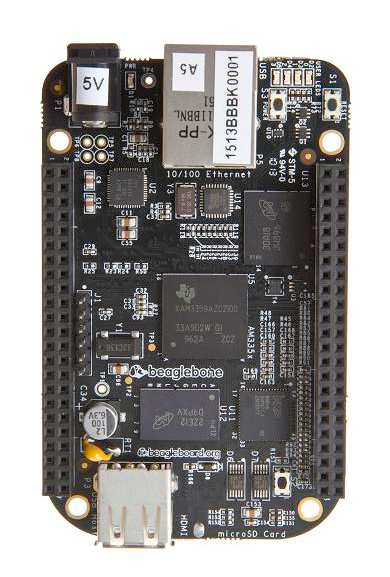
Received the BeagleBone Black (BBB) and the MK808 with a RK3066 SoC. My first impressions are really positive. Especially the BBB is quite an awesome device that I’m probably going to use a lot in favor of the Raspberry Pi. At first glance I had something like, the BBB blows the RPi away, but as soon as I started looking for documentation on how to put Debian on it for instance it became clear that the RPi is still the device to beat. The RPi community is huge, documentation for it is well laid out and working with the RPi is just so easy. The BBB on the other hand lacks a vivid community, is $10 more expensive and a lot more difficult to work with. Take the Debian install for example, seems quite some work to get that going.

The MK808 is surely an improvement over the UG80X I already own. It comes with a HDMI port instead of a HDMI plug, has an extra USB OTG port, a heatsink, hardware serial console access, a reset button and a power indicator LED. The pre-installed Android version looks better too. I flashed my RT kernel recovery image on it, inserted the Micro SD from my UG80X and it booted without any issues. So I’m going to pursue my goal to get a real-time, low-latency environment running on a RK3066 based device on the MK808 and find another purpose for the UG80X.

Edit: Getting Debian to work on the BBB is actually quite easy: http://elinux.org/BeagleBoardDebian#Demo_Image
Next time I’ll promise to make better use of my Google skills.

More ARM goodies II

Hacking an Android TV stick, the sequel

jeremy@rk3066:~$ uname -a
Linux rk3066 3.0.36-rt58 #1 SMP PREEMPT RT Thu Jul 4 13:18:23 CEST
2013 armv7l GNU/Linux

Managed to compile and run a real-time kernel on the Android TV stick with the RK3066 SoC. Packaged the latest version of amSynth (1.4.0 which has been released recently), installed it, fired up JACK and amSynth and so far no xruns, nothing. And this is with -p64!

jackd -P84 -p32 -t2000 -dalsa -dhw:Device -n3 -p64 -r44100 -s -P

I should measure the latency of the $2 USB audio interface I’m using to find out what the total latency of this set-up is. Well, at least I got the system latency for usage with softsynths like amSynth down to 64/44100*2=3ms. Now that’s a usable situation.

jeremy@rk3066:~$ lsusb | grep -i c-media
Bus 002 Device 006: ID 0d8c:000e C-Media Electronics, Inc. Audio Adapter (Planet
UP-100, Genius G-Talk)
jeremy@rk3066:~$ cat /proc/asound/cards 0 [RK29RK1000 ]: RK29_RK1000 - RK29_RK1000 RK29_RK1000 1 [HDMI ]: ROCKCHIP_HDMI - ROCKCHIP HDMI ROCKCHIP HDMI 2 [Device ]: USB-Audio - Generic USB Audio Device Generic USB Audio Device at usb-usb20_host-1.1, full speed

A big pro of this stick is that it suffers less from SD card corruption than my RPi. Yesterday evening I wrecked up yet another SD card when testing my RPi with a real-time kernel, it’s getting a bit cumbersome. Speaking of real-time kernels, it was quite some work to apply the RT patchset to the RockChip kernel source. Had to add stuff by hand and when I finally got everything in place it wouldn’t compile. But I managed to solve all the build errors. After flashing the kernel image the TV stick wouldn’t boot of course, it hung at some point. But I quickly saw that the issue was with the SD card reader and that it was similar to the SD card reader issue on the RPi for which I found a workaround. So I added an #ifdef clause to the RockChip SD card reader driver, recompiled, reflashed and wham, it continued booting. Now I have to clean up my build directory and get a usable diff of it against the pristine RK3066 kernel sources.

Hacking an Android TV stick, the sequel

More ARM goodies

Bought another Android TV stick based on the RK3066 SoC, the MK808 which is as far as I’ve understood kind of the default board to hack on.


MK808 Android TV stick

Also bought a BeagleBone Black development board. Why? Because apparently JACK runs well on it, also with USB interfaces (no need for the ALSA softmode option!) so I assume the USB implementation is better than those of the Raspberry Pi and the RK3066 based board I currently own. And I could get it cheaper over here in The Netherlands than other viable alternatives like the pcDuino or Cubieboard, also because of a coupon code I found on tweakers.net so I got a price reduction of a few Euros. Another reason why I bought it are the so-called capes that are available for this board. These capes are basically add-on boards and the cape that has my most attention is the audio cape. I’m thinking about buying that specific cape, solder two Neutriks on the audio in and out and turn it into the easiest DIY guitar effect box ever. Of course with guitarix loaded on it, the devs have done an incredible amount of work recently to get guitarix running flawlessly and painlessly on ARM dev boards like the BeagleBone Black.


BeagleBone Black


BeagleBone Audio Cape

More ARM goodies